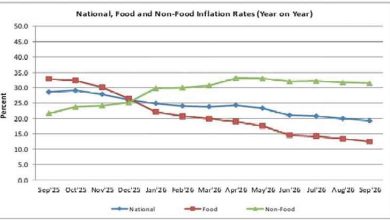
For Malawi’s private sector, borrowing has increasingly become a deterrent rather than a financing option, as lending rates remain among the highest in the region while returns to savers lag far behind inflation.
Treasury data from the Ministry of Finance show Malawi’s interest rate spread at about 33 percentage points—the widest among selected regional peers. Average lending rates are roughly 37.3 percent, while deposit rates average just 4.3 percent. By comparison, Botswana posts a spread of 4.3 points, South Africa just over three, Mauritius around 6.5, and even Zambia only 21 points.

Economics Association of Malawi president Bertha Bangara- Chikadza says the wide spread reflects both macroeconomic stress and a constraint on growth.
“Heavy domestic borrowing driven by persistent fiscal deficits encourages banks to lend risk-free to the government rather than to the private sector,” she notes.
High lending rates push firms toward informal or short-term financing, suppressing investment, while low deposit rates erode incentives to save formally, promoting informal savings and foreign currency hoarding.
Chancellor College economics lecturer Edward Leman attributes Malawi’s interest rate dynamics to fiscal dominance.
“Tight monetary policy has raised lending rates in line with the policy rate, but inflation remains elevated, showing weak effectiveness of demand-side tightening,” he says.
Sustained government borrowing provides banks with high-yield, low-risk alternatives to private lending, setting a floor beneath interest rates and weakening monetary policy transmission. With labor relatively abundant, high borrowing costs particularly hinder capital accumulation, investment, and long-term output.
The Bankers Association of Malawi (BAM) acknowledges concerns but cites structural realities. BAM president Phillip Madinga points to high operating costs, regulatory requirements, slow judicial loan recovery, and reduced competition—from 14 banks a decade ago to eight—as key drivers of wide spreads. The policy rate, currently 26 percent, also anchors lending rates amid high inflation and limited savings.
For SMEs, the impact is immediate. Malawi Union of Small and Medium Enterprises president James Chiutsi says high lending rates increase production costs, reduce competitiveness, and leave little room for reinvestment. Stringent collateral requirements, often exceeding 100 percent of loan value, further lock many SMEs out of formal finance.
At a pre-budget consultation meeting last Friday, Finance Minister Joseph Mwanamvekha questioned the sustainability of Malawi’s borrowing costs, citing policy measures in Kenya and Botswana that cap interest or limit spreads.
“People say the private sector is not borrowing. But who would borrow at that rate?” he asked, noting that lower borrowing costs could unlock investment, value addition, and employment.